You bought the AI logins. Nothing stuck.
Start on rung 01 with a free test you run yourself. Move up only when a written finding says to, and keep what every rung finds.
Setting up AI for one person and one recurring job? See Professional AI Packages.

The tools were fine. The start was missing.
Most firms start with a tool and hope a plan shows up. The ladder starts with a test, so the plan comes from what your own firm shows you.
Tools first, plan second
A login gets bought before anyone writes down which job it should do.
Nobody owns it
When the first answer is wrong, people go back to the old way, and no one is named to fix it.
No record of what works
Nobody can say which experiments stuck, so the next decision is another guess.
Every stalled trial spends the team's patience for the next one. The ladder spends it on one finding at a time.

Six rungs. Each one earns the next.
Start free. Move up only when a finding says to. Every quote comes after a short brief, in writing.
Free failure-test kit
FreeThe break it shows
FreeReadiness snapshot
After a briefOne-workflow review
After a briefFull operating assessment
After a briefBuild, then ongoing care
Only what is ranked| Rung | What it is | You keep | Moves up when | Price |
|---|---|---|---|---|
| P1 Free failure-test kit | Twelve self-serve failure tests you run yourself, on your own phone and inbox | Your scorecard: Pass, Fail or Not tested beside every check | A check comes back Fail | Free |
| P2 The break it shows | Your marked results name the break and the lane it sits in: capture, delivery, ownership or recovery | The place to fix first | You want to see what sits behind the break | Free |
| P3 Readiness snapshot | The highest-signal questions, one working session, a findings register and the top three decisions that need you | The findings register and the three decisions | A finding points at one workflow | Scoped after a short brief |
| P4 One-workflow review | One workflow across up to three connected systems, investigated before a build | A written plan for that workflow | The plan says the firm needs the full picture | Scoped after a short brief |
| P5 Full operating assessment | The full findings register, a ranked build backlog and an AI-use policy draft | The register, the ranked backlog, the Needs-you list and the policy draft | The backlog is ranked | Scoped after a short brief |
| P6 Build, then ongoing care | Workflows, websites and automations scoped from a finding, then findings re-checked each quarter | The build, its acceptance checks and the handover notes | You decide. Care is a separate agreement, not an automatic renewal | Scoped after a short brief |
Findings you can check, not opinions.
Every finding cites the exact questions behind it and carries one of four evidence states, so nothing is presented as tested when it was only read.
- A findings register, numbered, with the questions behind each finding
- A ranked build backlog, so the firm builds in order
- A Needs-you list of the decisions only you can make, with recommended defaults
- An AI-use policy draft for your legal counsel to finish, not a compliance certificate
One line from a findings register
Demonstration, not a client result.
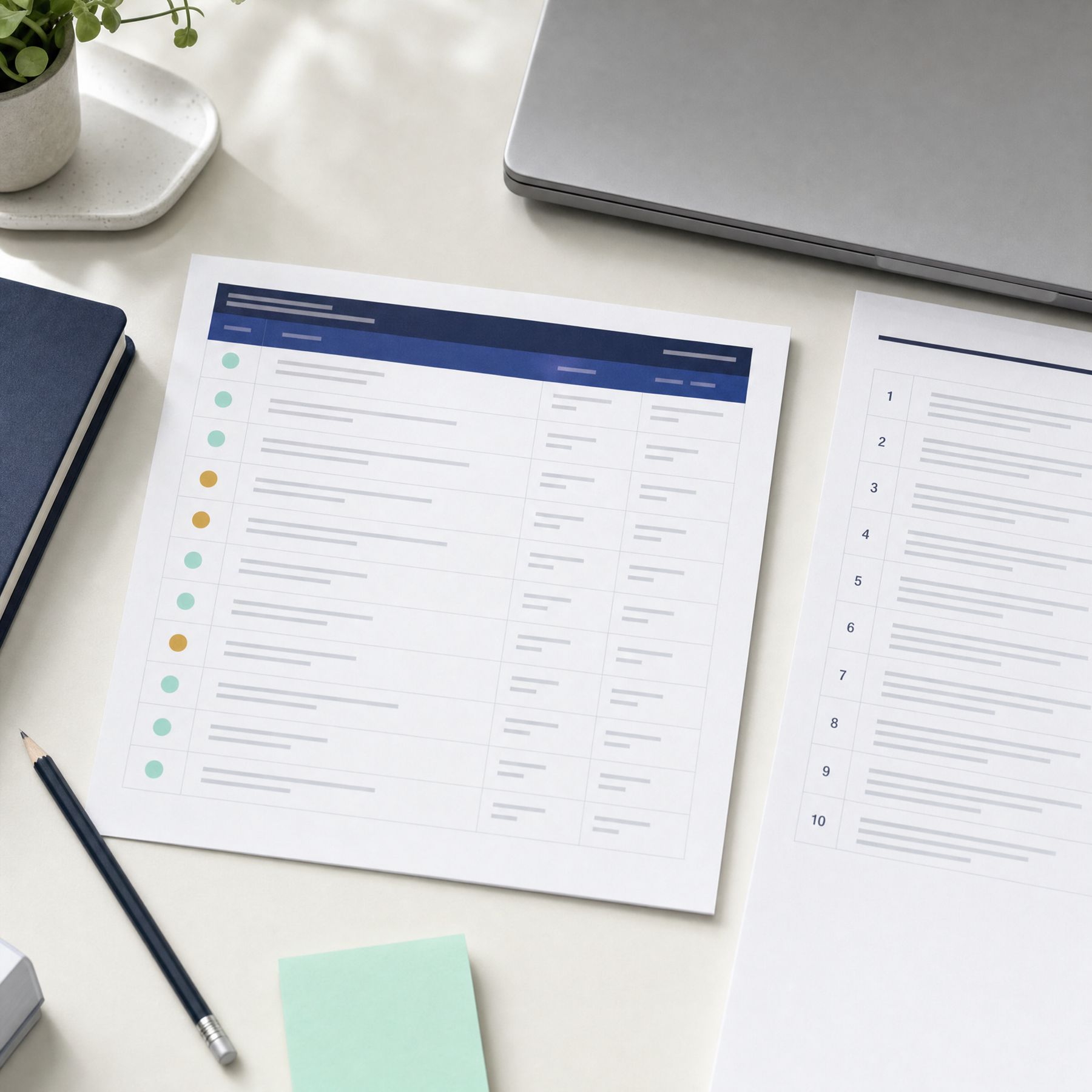
What the ladder looks at first.
The rungs are the same for every firm. Where they look first depends on how your work actually runs.
Law firm owner
Where it looks first
- Who owns a new-matter inquiry from first call to engagement letter
- Which AI tools the firm already pays for, and who actually uses them
- Where client information goes when staff paste it into AI
What you get
A written list of what to fix first, in the order the findings say, before anyone buys another tool.
How it stays safe
Nothing is built until the acceptance checks are written. The AI-use policy draft goes to your counsel to finish.
CPA firm owner
Where it looks first
- How client onboarding and the document chase actually run today
- Which repeat work could be drafted by AI with a person signing off
- Where client return information sits and who can see it
What you get
A ranked backlog you can act on between busy seasons, one rung at a time.
How it stays safe
Drafts only with a named reviewer, and no client return information in public AI tools.
Consultancy founder
Where it looks first
- What happens after the proposal is won and delivery starts
- Where status updates and handoffs slip between people
- Which AI experiments stuck and which quietly stopped
What you get
A findings register that shows the partners exactly where delivery leaks, with the questions behind every finding.
How it stays safe
Every finding carries an evidence state, so nothing is presented as tested when it was only read.
Agency owner
Where it looks first
- How client requests arrive across inbox, chat and calls
- Who owns the next step on each request
- Which tools the team opened once and never again
What you get
One place to start instead of another round of tool trials.
How it stays safe
You choose the data each workflow can use, and a person reviews before anything reaches a client.
Answer, rank, then build.
Three steps, in this order, on every rung that produces findings.
Answer
Every question gets a disposition instead of a guess.
Rank
The backlog is ranked. Decision-only findings go to the Needs-you list.
Build
Build only what is ranked, with acceptance checks written before work starts.

Written down before it is built.
- Before work startsAcceptance checks are written into the scope, and you approve them.
- If a check failsThe failure is documented and reworked before handoff.
- Your dataYou choose the data each workflow can use, and a person reviews before any output is used.
- Your rulesThe AI-use policy draft is for your counsel to finish. It is not a compliance certificate.
- After the buildOngoing care is a separate agreement, not an automatic renewal.
Mike Rodgers runs your ladder.
Mike scopes the work with your people, builds it, writes the acceptance checks you approve before the build starts, and stays until a named owner on your team can run it.
Rodgers Intelligence Group, Denver. In person or fully remote.
Why the ladder starts small.
The usual path is a paid assessment, then one big rollout. The ladder keeps every step small enough to check.
Find the first break this week.
The kit's first round takes ten minutes and needs a phone. You run every check yourself, mark Pass, Fail or Not tested, and keep the scorecard either way.